How to spot fake followers on Instagram and TikTok
Eight signals that an influencer's followers or engagement may be bought, how to check each one by hand, and what to ask the creator before you pay for a campaign.
Bought followers and engagement are cheap and easy to find. For a brand, the cost shows up later, as a sponsored post that reaches far fewer real people than the follower count suggested.
You do not need special software to catch most cases. The signals below can be checked by hand in about fifteen minutes per creator.
Why it matters
Fake followers do not buy products, and they distort every metric you use to price a deal. A creator with 100,000 followers of whom a third are inactive or fake has a much smaller audience than you are paying for. Bought likes and comments make engagement rate unreliable too.
Not every inactive follower is a sign of fraud. Every account collects some bots and abandoned profiles over time. What you are looking for is a pattern.
Eight signals to check
1. Engagement that does not match the audience size
Calculate engagement for the last 10 posts with the engagement rate calculator. Very low engagement for the account size suggests many followers are not real or not active. Very high engagement on every post, with little variation, can suggest bought likes. Compare with creators of a similar size in the same niche. Our Instagram engagement rate guide explains how to read the result.
2. Sudden follower jumps
Steady growth or growth after a clear viral moment is normal. A jump of thousands of followers in a day or two, with no standout post, is the most common sign of a purchase. If you cannot see a growth history, ask the creator for an analytics screenshot covering the last 90 days.
3. Generic comments
Open five recent posts and read the comments. Warning signs include:
- Many short, interchangeable comments such as "Nice!", "Love this 🔥" or a single emoji
- Comments that do not relate to the content at all
- The same group of accounts commenting on every post within minutes
The last pattern often points to engagement pods, groups that agree to like and comment on each other's posts. Pods are not bought followers, but they inflate engagement in the same way.
4. Suspicious follower profiles
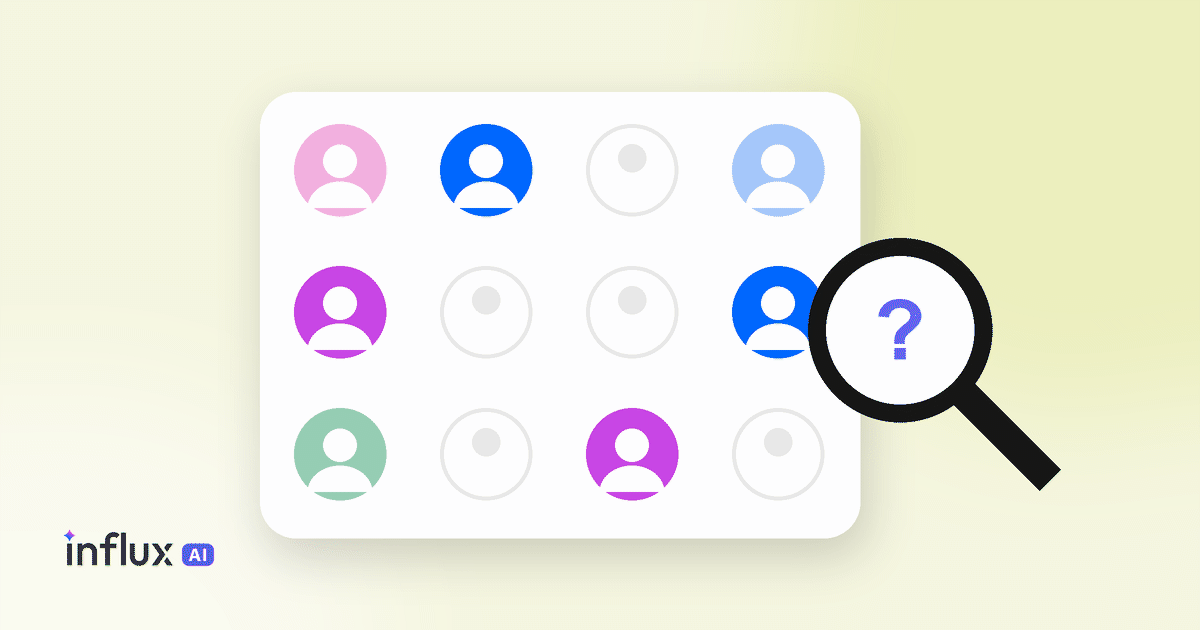
Tap through a sample of followers and accounts that liked a recent post. Be cautious if many have no profile photo, no posts, random strings of letters and numbers as usernames, or follow thousands of accounts while having very few followers.
5. Audience location that does not fit
A creator who posts in English about a local US topic but whose audience is concentrated in countries unrelated to their content deserves a question. Ask for audience location from Insights or TikTok Analytics.
6. Views far below followers on TikTok and Reels
On video platforms, compare median views with followers. A large account that rarely passes a few thousand views may have an inactive or inflated audience, or may simply have lost distribution. Either way, plan on the views, not the followers.
7. Likes without comments, or comments without likes
Real engagement has a fairly stable mix of likes, comments and shares. A post with 20,000 likes and four comments, or hundreds of comments and almost no likes, looks manufactured.
8. Sponsored posts that perform far below organic posts
If a creator's sponsored posts get a fraction of the engagement of their other content, real followers may be ignoring promotions, or the organic numbers may be inflated. To find a creator's past brand work quickly, look up the brands they mention with Brand Video Insights.
What to ask the creator
If a creator passes your first look but a few signals remain, ask for:
- Audience demographics from the platform's own analytics: top countries, cities, age and gender.
- Reach and impressions for three to five recent posts, including at least one sponsored post.
- Follower growth for the last 90 days.
Ask for a short screen recording rather than screenshots when the stakes are high. It is harder to edit. Most professional creators share this information without hesitation. Reluctance is itself useful information.
Build it into your process
Checking for fake followers works best as one step in a full review, alongside audience fit, brand safety and terms. Our influencer vetting checklist puts all of these on one page. If you are reviewing creators at volume, the Influx team can run vetting and outreach for you.
Try it with a free tool
- Engagement Rate CalculatorFree influencer engagement rate calculator. Enter followers, likes and comments to calculate a post’s engagement rate before you shortlist a creator.Open tool
- Brand Video InsightsResearch competitor influencer campaigns for free. Enter a brand to see creator videos, top creators, views and engagement on TikTok, Instagram and YouTube.Open tool